Paragraphic is a new cross-platform parametric graphic design application, combining traditional illustration tools with powerful procedural design features.
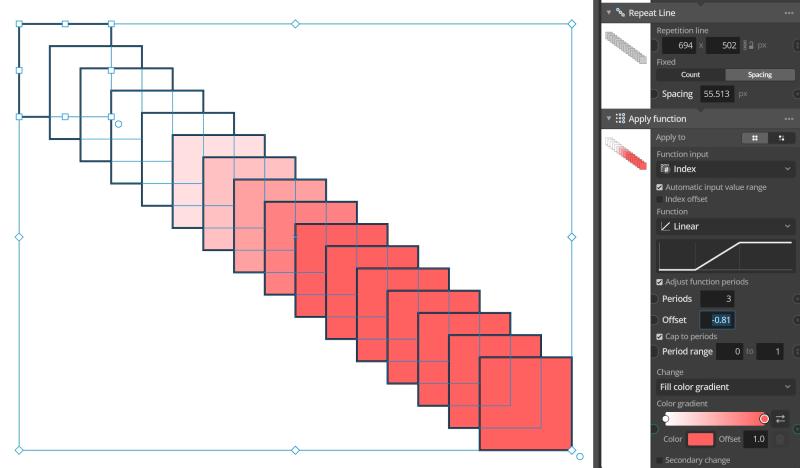
Complex repetitions, gradients and patterns
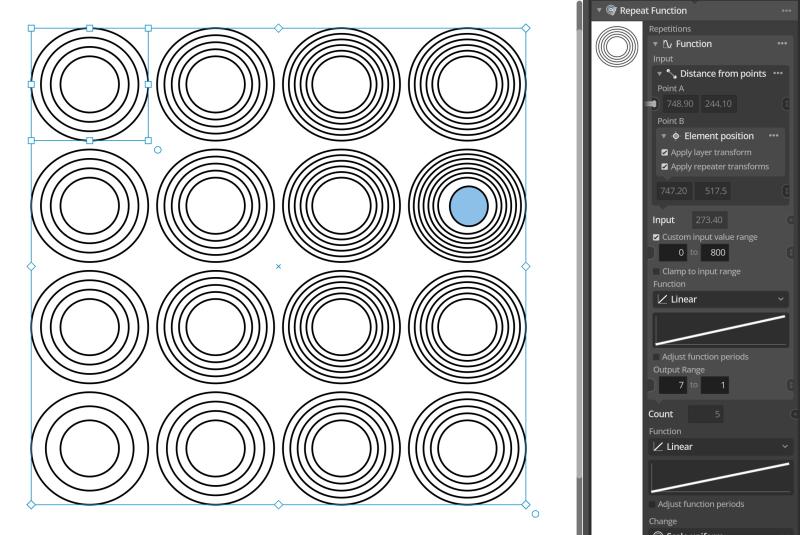
Easily create and modify multi-level repetitions and patterns, applying flexible modifiers or randomization.
Then just copy and paste the result as SVG vectors into your workflow.
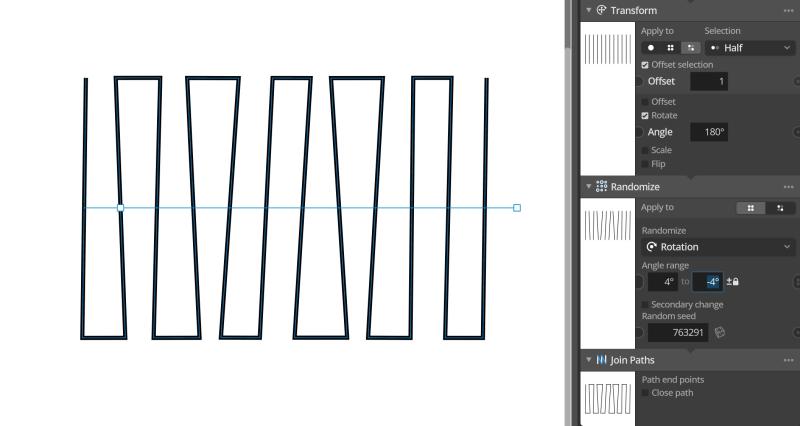
Non-destructive randomization
Replace, reorder or transform repeated elements at random with full control to add interest to your design.
All non-destructive with updates in real time to encourage gradual testing and tweaking.
Custom vector halftones
Create halftones, raster patterns and advanced vector gradients based on images or any other layer data.
Parametric design
Automate design tasks and create data visualizations using custom parameters and connections to control your designs.
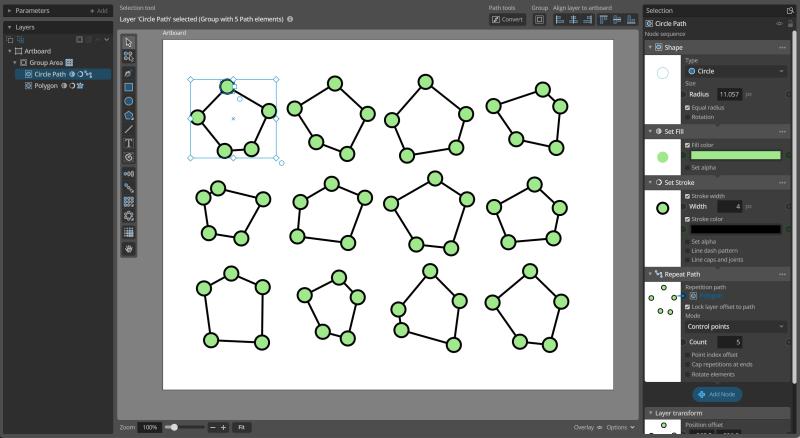
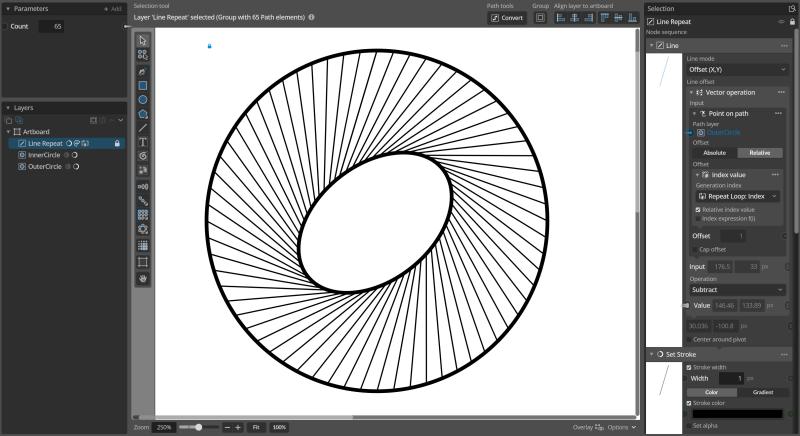
Modular design system, using a sequence of nodes on each layer that can be freely combined to create, repeat and modify content elements on each layer.
Non-destructive editing with real-time feedback, any property of any step in the generation sequence can easily be edited with the end result updated live.
Parametric control and connections, for precise values, automatic relationships between properties and data-driven designs.
Familiar layer-based editor, wrapping the parametric generative node sequence features in a traditional graphical editor interface similar to other vector graphics editors.
SVG import and export, designed to work as a complement to your existing design tools, just copy & paste between them as SVG.
A new Paragraphic update with improvements to the Circle repeater, including new fixed spacing autoamtic count modes alogn with other new features and bugsfixes.
Click below to find out more about the update and try it out for yourself.
We know the money can be tight for schools and students alike, so we now offer an Educational Site license option for any school / university or other educational institution interested in Paragraphic.
With this license you get unlimited users for Paragraphic at a single educational location, meaning you get the application for all students and staff at the school with a single license at the cost of just a couple of regular licenses.
A new Paragraphic update with a couple of new features like caping functions to period ranges and new layer sampling settings, along with some UI/UX improvements and bug fixes.
Click below to find out more about the update and try it out for yourself.
Another Paragraphic update with mostly fixes to various bugs and under the hood improvements. It also brings some improvements like improving the usability of the Mirror Repeater node and adding a new Reverse Path node that changes the direction of a path, which can be useful when joining paths together or repeating elements along a path.
Click below to find out more about the update and try it out for yourself.
Another smaller Paragraphic update has released today with some more improvements and fixes after the 1.5 feature update. This update also adds a new Join Paths node that lets you combine multiple paths into a single longer one.
Click below to find out more about the update and try it out for yourself.
A new 1.5.0 feature update of Paragraphic has been released today. This update includes a lot of improvements and new features like a new dynamic snapping system, path symmetry and offset modifiers and mirror repeater along with a very long list of smaller fixes and improvements.
Here's a video showing of some of the highlights!
Click below to find out more about the update and try it out for yourself at paragraphic.design!
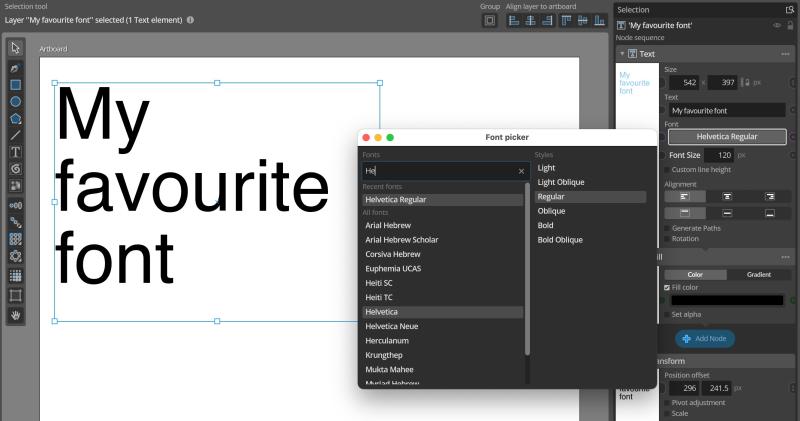
This update is another smaller update with improvements the undo/redo system with better grouping of actions and fixes to a number of undo-related issues. It also adds a new font picker panel with filtering and a list of recently used fonts to make selecting fonts easier.
Click below to find out more about the update and try it out for yourself.
This update is another smaller update with some smaller new improvements and a couple of bug fixes after the larger 1.4 feature update. The most prominent new features is that the Element position input node added in 1.4 can now also be used outside Change nodes and takes later repeater node transforms into account like the Value from layer sampling input nodes. Another addition is support for both importing and exporting WebP format images.
Click below to find out more about the update and try it out for yourself.
Purchase process
The online purchase process is handled quickly and securely by Paddle.com.
After you complete your purchase you will immediately be given access to your license codes and information on how to unlock the full version of your software. You will also be sent two e-mails from Paddle to the address you've specified. One receipt for your records and one titled "Your <Product> Paddle.com Order" containing your license code and unlocking information.